
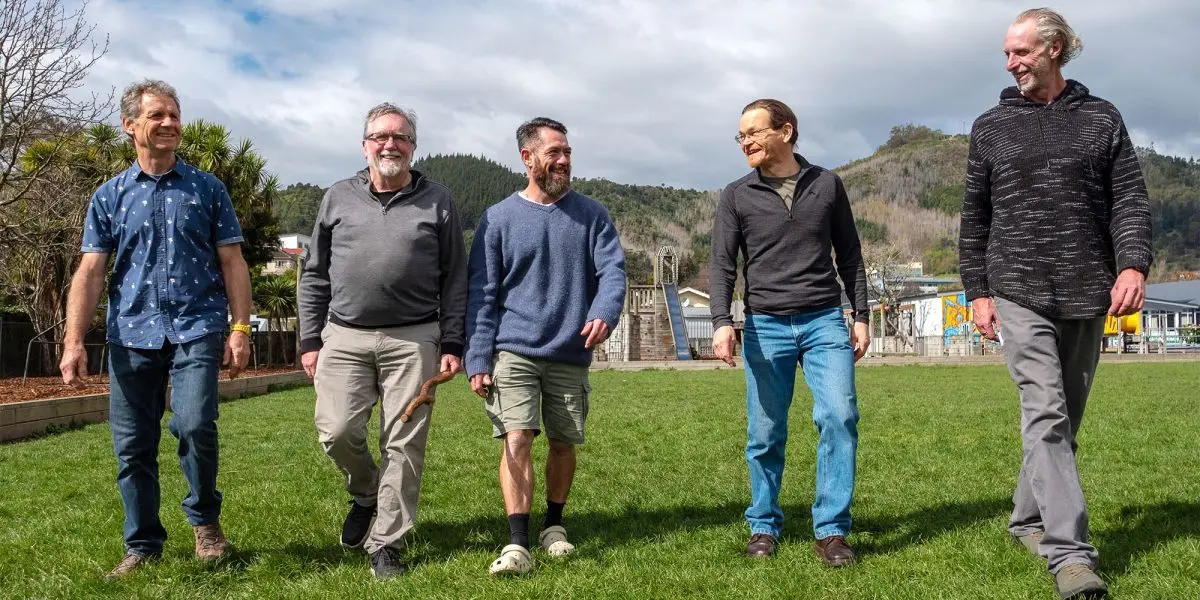
A man is reliable at work, handy around the house, and good to his partner. He's even keel, the kind of bloke people call solid. And though he'd never admit it, he's a bit dead inside. No one really sees him or knows who he is. He feels like he's on a hamster wheel, with no idea what decisions put him there.
How is that possible? A man can be respected, relied on and loved, and still go years without being truly known. What people love and rely on is the role he plays. He knows he wants more from life than to keep being the man everyone needs him to be, but he's tired, and he feels stuck. It doesn't have to be this way.
What is authenticity? Dropping the mask
Authenticity means your outside matches your inside. What you say, do and show lines up with what you actually think, feel and want, rather than with what you believe others expect. Psychologists who study it describe the same core: knowing yourself honestly, acting from that rather than to win approval, and letting people close enough to know the real you.
It isn't saying everything to everyone, walking away from responsibilities, or treating every passing mood as the truth. A man can be a provider, a dad and a dependable mate and still be authentic. The question is whether there's room for the man behind the roles to be seen as well.
The masks men wear: when a role hides the real man
None of these roles are fake. Most are worth being proud of. A role becomes a mask when the man is too afraid to stop. Underneath is usually shame, the quiet belief that the real man wouldn't be accepted, so it feels safer to hide behind the mask than to risk finding out. And the longer he wears it, the easier it is to forget it's there, until he struggles to take it off, or even to remember the skin underneath.
Here are just a few of the masks men can get stuck with:
The son
Picture a boy who is good at rugby. Every Saturday his dad is on the sideline, and after a try he gets the look and the words: "That's my boy." He learns quickly where the warmth comes from. But he's also the kid who notices things, who fills notebooks, who goes quiet when someone is upset and knows why. Nobody on the sideline asks about that. The one time he shows his dad something he's written, he gets "why do you always have to be so sensitive?" So he puts that part away and keeps scoring. Thirty years later he's still scoring, and his dad, now proud of the man he's become, has never met the boy whose sensitivity was his greatest gift.
The partner
He's the steady one. When the washing machine floods or the bills need paying, he's the one who handles it. His partner says, with real love, "You're my rock. I don't know what I'd do without you." It's the nicest thing anyone says to him, and it's also a lock on the door. Rocks don't wobble. So when he's lying awake at 3am wondering if any of this is what he wants, he says nothing, because the person who loves him most has just told him who he's allowed to be.
The mate
He's got friends he's mountain biked, fished and watched the footy with for twenty years. They know his jokes, his favourite beer and his bad taste in music. They don't know he hasn't slept properly since his dad got sick, or that he's been quietly wondering what his life is for. It's a good friendship. It just only reaches as far as the activity.
Why authenticity matters for men
Wearing a mask is work. It's like carrying a full tray through a crowded room, all day, every day, never able to put it down. A man living this way never really rests, because there's no off-duty self. The mask comes home with him, and the next one is waiting the moment he walks through the door to greet his partner or his dog.
This way of living seems normal, but it comes with real costs. The first is that he's never truly seen. Being praised or relied on for a role isn't the same as being valued as yourself, and no amount of appreciation fills the gap, because the appreciation is for the role he's hiding behind, not the man underneath. This is part of why a man can feel lonely in the middle of a full life.
The second is that he can lose track of himself. After decades of meeting other people's expectations, "what do I actually want?" becomes a hard question. The answer keeps coming back as "what's needed" or "what's expected". Many men reach midlife and realise they haven't had the space, or the time, to really ask themselves, let alone find out.
How a men's group helps men drop the mask
A men's group is one of the few places a man doesn't have a job. Nobody needs him to provide, fix, lead or be the funny one. He can turn up as he is, on a good week or a lousy one, and the only expectation is honesty and listening.
Something shifts when that happens. The more space there is for a man to drop the mask, the more connection there is. He sees other men as they actually are, with the doubts underneath the confidence, and finds he doesn't think less of them. When it's his turn, he's heard without anyone trying to fix him, advise him or slot him back into his usual role. He's accepted as he is, with no expectation that he change.
That's the heart of what makes a strong men's group work, and it's close to what healthy masculinity actually looks like. It's also why the man who keeps one foot out the door gets less than he could. He's still wearing the mask in the room.
The challenge: be yourself among men who care
Here's the challenge: stop performing, and find out what's true. You will never learn whether you're loved for who you really are by playing the part well. All that tells you is that the part is loved. The only way to find out is to let people see the rest (the mess, the soft parts, the shadow) and watch what they do.
You don't have to do it all at once. Start by saying the thing you've been carrying:
"I keep falling into the same stupid arguments in my relationship, and it feels like it's getting worse, not better."
"I don't actually enjoy the thing everyone thinks I'm great at."
Then notice what happens next. Likely the men nod in recognition and ask more about how it's going and how it makes you feel. Maybe it's the first time anyone has truly cared how you feel about something, perhaps even more than your partner ever has. Suddenly it feels much safer to go deeper next time, and the time after that. You find yourself looking forward to being heard and valued each fortnight, in large ways and small.
As the trust builds, you can drop the mask more fully, until you find out what you couldn't know any other way: that you're loved for who you really are, shadow and all. Many men discover they didn't lose respect for being vulnerable. They were loved more for it, because for the first time the love was for the man and not the role.
Living authentically: what changes outside the circle
It doesn't stay in the room. A man who has practised honesty with other men finds it easier at home, at work and with himself. The changes are often small: "I'm not sure." "I could use a hand." "Actually, I don't want that." By modelling this kind of honesty, he may loosen something in those around him and invite more honesty from his partner and kids in return.
His energy shifts too. A huge amount goes into maintaining an image, and when a man stops spending it there, it comes back. It flows toward what he's put off for years: what brings him joy, what feels like purpose, the deeper desires that got buried under the tasks and roles of daily life.
The roles usually stay: he's still a partner, a dad and a mate, but not only those things, and he gets to put them down and rest. He can be honest about which relationships no longer serve him, and he may spend less time with old mates who know just one outdated version of him. Maybe he's struggled to make real friends his whole adult life. Now new people start showing up, people who respect the man he's beginning to show the world. The masks were holding him back.
Honesty breeds more honesty, and a small shift in intention can lead to a lot more connection. Sounds too easy? Deep down, you know it's true. You only have to dare yourself to be open enough to find out.
If you'd like a space to be the man you are rather than the one everyone expects, find a men's group near you.