
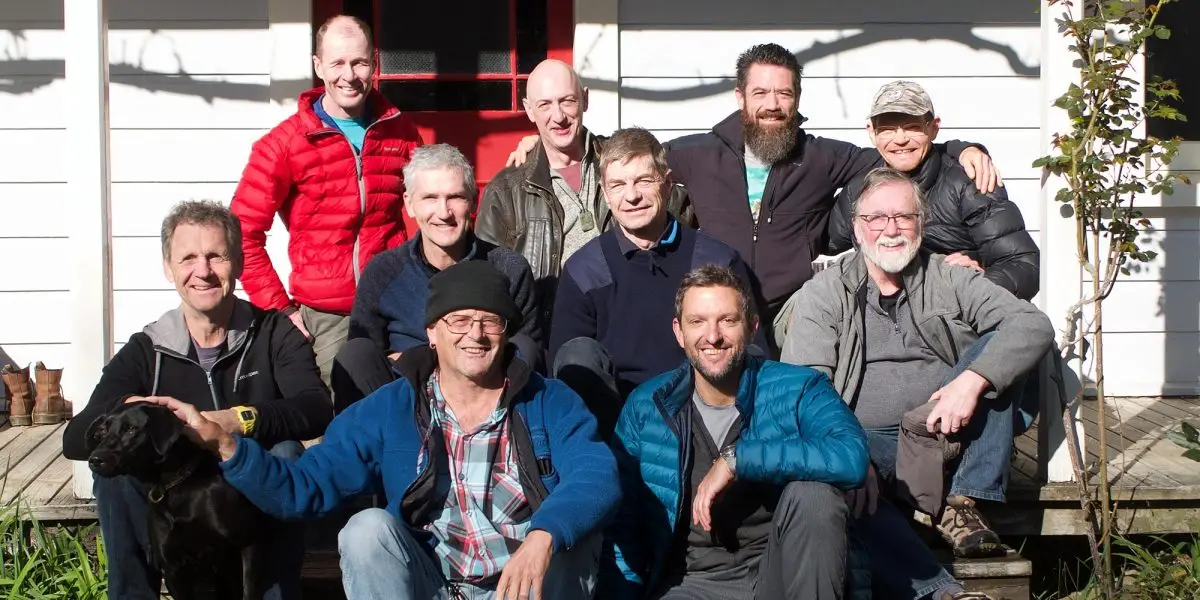
This is an evolving list of men's group principles covering purpose, structure, respect, and confidentiality, developed over 25+ years of men's group experience in New Zealand. Every group is different and develops its own culture, format, and traditions. However, all groups listed here confirm they follow these core principles, at least in spirit, if not in full. These guidelines help ensure men are not directed to groups that are abusive, exploitative, or biased.
1. Purpose
The aim of a men's group is self-development and self-empowerment. Groups are not tied to any religious, political, or cultural agenda, though such topics may surface if they are part of a man's story.
2. Equality & structure
Men's groups are peer-run and non-hierarchical, where all men are equal. They are independent, non-commercial, and non-professional. No one outside the group determines its goals. A facilitator may help start a new group, but their role is temporary: to model circle work, share these standards, and guide the group toward independence.
3. No profit
No man should profit from running a group. Attendance is generally free, though some groups may collect a small fee to cover venue costs.
4. All men are welcome
Groups are open to any man, of any age, culture, or background, who is willing to work on himself and support others. Men's groups are not therapy or social services. Men with significant mental health issues should seek professional help, and a group may decline or remove a member who is not a good fit.
5. Commitment
Commitment is essential: to one's own growth and to supporting other men. Men are expected to attend every meeting so they can follow the story as it unfolds. This often means setting boundaries with family, partners, or other commitments so group time is protected. (Some groups are more flexible or run as open/drop-in circles.)
6. The sharing circle
The heart of the work is the sharing circle. One man speaks (often while holding a talking stick) and the others practise active listening. Interjections are rare, and only to help the speaker stay focused or deepen his connection to what he is sharing. Standing to share is encouraged, but optional.
7. Speaking from self
Men speak in "I-statements," focusing on their own truth and feelings. We practise self-responsibility, not blame. We avoid sweeping generalisations, claims of absolute truth, or speaking on behalf of others.
8. Confidentiality & trust
Confidentiality is non-negotiable. What is shared in the group stays in the group. Trust and safety come from respect, non-judgment, and knowing that every man's story is valid.
9. Personal responsibility
Each man is responsible for his own safety and boundaries. Meetings are sober spaces — no drugs, alcohol, or violence.
10. Feedback
Feedback is part of the process, but it is not advice-giving or problem-solving. Its role is to offer perspective, options, or reflection, while supporting a man to make his own choices. Feedback should be carefully considered, respectful, and validating, avoiding cross-talk or back-and-forth discussion. Every man may request or decline feedback at any time.
11. Challenges & accountability
Respectful, compassionate challenge is essential to growth. Challenges must be offered with kindness and care. The speaker may choose to reject or defer a challenge. To support positive change, a group can hold a man accountable for commitments he has made to himself.
12. Experimentation & mistakes
Men are encouraged to take risks. Mistakes are part of learning. Strong groups can hold significant challenge, discomfort, and distress safely.
13. Dealing with trauma
Working with trauma and its patterns often arises in men's groups. Only groups with a strong culture can safely hold this level of vulnerability and potential cathartic release. Care must be taken to avoid re-traumatisation. More serious trauma should always be supported by professional therapy outside the group.
14. Group autonomy
Each group determines its own culture, boundaries, and rituals, but must adhere to these principles in spirit, if not in full, to maintain safety and integrity. Group independence distinguishes men's groups from churches, cults, the wellness industry, and therapy groups. Any changes to these principles should be made only by unanimous agreement of the group.
Wondering what a men's group is NOT? We've written a more detailed post on how men's groups differ from therapy, church groups, AA, Men's Sheds, and other male spaces.
If you're thinking about starting a group, see our practical guide for getting started.
Do you feel like these can be improved? Please contact us and let us know.