
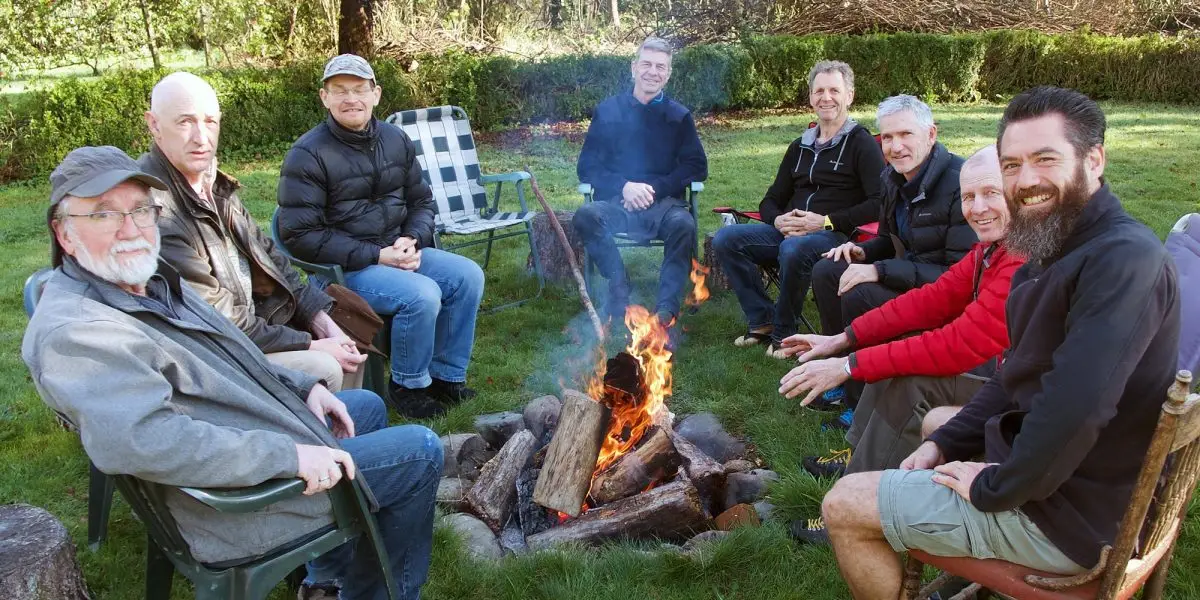
Starting a men's group is one of the most meaningful things a man can do for his community. It doesn't require special qualifications or a perfect plan. It requires one man willing to take the first step, and enough persistence to keep showing up while something real begins to grow.
This guide draws on more than 25 years of men's group experience across Aotearoa, and on the resources developed at mensgroup.nz to help men get started.
Be clear about why you're doing this
Before anything else, take some time to reflect on what's drawing you to start a group, and what you hope it will offer the men who join.
Most men who start groups do so because they've experienced something themselves — loneliness or disconnection, a sense that something important was missing, or the relief of finally having a space where honest conversation was possible. That personal experience is your most important asset. The clarity you have about what you needed, and what helped, is exactly what will allow you to hold space for other men going through similar things — men seeking deeper connection, a stronger sense of purpose, or simply wanting more from life and ready to grow into it. You don't need to have everything figured out before you begin. You just need to believe, from your own experience, that this kind of space matters.
Start with yourself
If you haven't already attended a men's group, that's the best starting point. Try to attend as many groups as you can before forming your own, in your home region and, when you travel, reach out to groups in other towns and ask if you can sit in as a guest. Most groups welcome visitors, and every group will teach you something about how a circle can work and what you want to build.
Beyond regular groups, men's retreats and initiation weekends provide a deeper foundation in the principles and practices that make this work. Programmes like Essentially Men's Men Being Real, BROS weekends, and the various retreats listed on mensgroup.nz/events are all worth exploring. Independent groups also run weekends in many regions, including events like the Lake Rotoiti weekends, which offer a grassroots experience of New Zealand men's work. The ManKind Project's New Warrior Training Adventure is another option for men wanting a more intensive experience.
You don't need to have completed a weekend programme to start a group, but genuine personal experience of men's work will make you a more grounded facilitator from the beginning.
Reach out and gather prospective men
Personal referrals are by far the most effective way to build a group. A direct invitation from a man who genuinely believes in what he's building carries far more weight than any poster or social media post. Don't underestimate any man's desire to share and grow. Even if you never considered your rugby mate the type, you may not know everything they are going through, and they may be more willing than you thought to open up and work through issues in a safe space among other men. Most men, given the right space, are more open to this kind of work than they let on, so don't limit yourself to asking only the 'safe' men you're sure will say yes. Think about all the men in your life who might benefit, and invite them personally. Encourage every interested man to do the same.
Beyond personal networking, use multiple channels to reach men who are quietly curious but might never ask directly. A social media post from your personal account or a local community group can be surprisingly effective. Keep the language warm and link to mensgroup.nz so men can learn more first. Posters in cafes, gyms, community centres, and health clinics reach men who aren't online. A brief message to a coach, employer, or community leader asking them to share the word can open doors that personal networks don't reach.
Consider a low-barrier starting point
Not every man is ready to commit to a regular group straight away. A men's open evening or information night (a one-off event with no obligation) gives men a chance to learn what a group is and meet the people involved before deciding whether to join. A casual drop-in format in the early weeks can serve a similar purpose, helping men ease in before the group settles into a more committed structure.
Find your uncles
Before your first meeting, seek out one or two men with some experience of men's work. Some traditions call these men "uncles." They don't need to be experts, just a few steps further along than the newer men in the room and willing to show up, speak honestly, and model genuine participation. Their presence in those early meetings will shape the culture more than any set of rules.
Aim for 10 to 12 men
A group of 10 to 12 men is a great target to aim for, but group numbers can vary widely while still being effective. 10 to 12 is large enough to function well when some men are unavailable, and small enough that everyone gets genuine time and attention. Don't wait until you have a full group to start. Begin with whoever is ready and build from there. Generally 5 or 6 men is enough to get started. Some men prefer smaller groups anyway, as sitting with fewer men can seem less intimidating when first learning to share.
One thing worth keeping in mind as the group grows: culture comes from the people in the room. Most men will be a good fit, but occasionally someone joins who consistently disrupts the dynamic, dominates conversations, or simply doesn't share the values the group is trying to build around. Addressing this early, with honesty and care, is part of the facilitator's responsibility. A small group is particularly vulnerable to one person pulling the energy in the wrong direction, and it's kinder to everyone, including that man, to have an honest conversation sooner rather than later. We look at this in more depth, along with other challenges that come up in group life, in our article on when things get hard.
Set things up well from the start
Choose a venue that feels comfortable and private. Agree on a regular time and stick to it. Many new groups meet weekly to begin with, as the shorter gap between meetings helps build closeness and momentum faster. Once the group has solidified, most move to fortnightly.
Share the guiding principles with every new member at or before the first meeting, and take time to go through them together. They're the foundation of a safe and effective group. Our sharing circle topics are a useful resource in those early meetings when men are still learning what to bring to the circle.
Set up a group chat to communicate meeting information efficiently. Send reminders before each meeting, ask men to confirm attendance, and follow up personally with any man who misses a session. This small expectation of communication helps initiate men into the kinds of accountability and honesty they will ultimately practise as regular members.
Keep the group chat purely logistical: meeting times, reminders, and confirmations. What is shared in the circle stays in the circle, and that principle applies to digital spaces too. You never know if a man's partner may see his phone and read the group messages, another good reason to keep anything personal strictly within the in-person meetings.
Opening and closing the circle
It's worth establishing a simple opening and closing practice from the very first meeting. These rituals help men transition out of the busyness of their day and into the quality of presence the circle asks of them.
To open, begin with a few minutes of stillness before inviting each man to briefly name what he's feeling and where and how he feels it in his body. It's a simple but surprisingly demanding practice, and a powerful way to help men arrive, settle, and connect with what's actually present before the sharing begins. Some groups add something more physical to this opening, such as drumming or movement, to help men shift out of thinking mode before the circle opens. We explore this practice in more depth in our article on how are you feeling, and where do you feel it.
To close, go briefly around the circle and invite each man to share one thing he's taking away from the evening, and if he wishes, to offer a word of gratitude, to the group, to a man who said something that landed, or simply for the space itself. A sentence is enough. This brings the meeting to a natural end, helps men consolidate what they've heard, and sends everyone home with something to carry forward rather than the conversation simply trailing off.
Build a culture of commitment
One of the most valuable things a men's group can offer is also one of the easiest to underestimate: the simple practice of showing up. Most men have practised commitment in one or two directions, to their work, and perhaps to a partner or their children. Commitment to other men, showing up for them week after week, year after year, regardless of how life is going, is something most men have rarely, if ever, been asked to do.
A men's group asks for exactly this. It's worth naming it explicitly with new members early on. Attendance isn't just logistical. It's part of the work itself. And for many men, the practice of it turns out to be one of the more quietly significant things the group offers. Not because attendance is a rule, but because the act of showing up consistently, when you're tired, when life is busy, when part of you would rather stay home, gives a man a sense of his own word mattering. This is a relationship with commitment that extends beyond obligation and into genuine care for others. Many men find this spills outward into how they show up as fathers, as friends, as partners.
Your job in the early life of a group is to hold that expectation clearly, model it yourself, and help men understand that their presence matters, not just to themselves, but to every other man in the room.
Speak from experience, not from the head
One thing worth knowing: there's a difference between sharing and giving a speech. Sharing is personal and emotionally connected, speaking from your own experience in the moment. A speech talks at the group rather than revealing something real. Most men find that the more honest and personal they are, the more the group responds. A useful question to carry into any meeting is simply: what am I not saying? Often the thing we're least willing to say is the thing most worth saying.
When offering a response to another man's sharing, the most valuable thing is often not advice or feedback directed back at him, but an honest account of what his sharing brought up in you. What it triggered. What it reminded you of. Where you recognised yourself in his story. When a man does want to offer something more direct in response, he should pick up the talking stick and speak to the entire group from his own experience rather than directing advice to the other man. This keeps the response personal and grounded, rather than positioning you as someone who knows what the other man should do.
Leadership: initiative, not power
In the early life of a group, someone needs to keep things moving: opening and closing the circle, encouraging I-statement sharing and respectful feedback, watching the time, and ensuring every man gets a chance to speak. That person is likely to be you, at least at first.
But leadership in a men's group is not about authority. It's about initiative rather than power: overcoming inertia, holding the group's values, and doing the small things that keep the circle alive. Everyone is equal. If power or ego enter the room, that's a challenge the group needs to face, and someone needs the courage to name it.
Leadership doesn't require being the loudest man in the room. It means standing for the group's values with care for yourself and for others, and not waiting for someone else to step up. The goal is a group where leadership is shared, the facilitation role rotates, and natural leaders emerge over time. Read more in our facilitators workshop recap.
To create shared leadership and a sense of group ownership, invite every man to contribute something meaningful: a drumming or movement session, a short mindfulness practice, a passage from a book they found transformational, or any modality they've found useful to process thoughts, events, and emotions. Each group is an expression of the men in it. Trying new things is always encouraged.
For men wanting to develop facilitation skills further, workshops run each year across both islands. See mensgroup.nz/events.
Pay attention to the quieter men
Every group has men who speak less than others. Check in gently with men who haven't spoken in a while, not to pressure them, but to let them know they're seen. A simple "we haven't heard from you tonight, is there anything you'd like to share?" is often enough. Over time, quieter men often become some of the most honest and valued voices in the room.
Growing the group over time
Starting a group won't always be smooth, men will drop out, attendance will fluctuate, some meetings will fall flat. This is normal. But you may also be surprised at how quickly men respond to the format, how quickly real depth becomes possible, and how engaged most men become when they witness honest sharing in a strong container of men.
Most groups take six to twelve months to develop the trust and culture that makes deeper work possible, and allows a temporary facilitator to fully step back, letting others take up the role in turn. Keep inviting new men as numbers fluctuate, revisit the guiding principles periodically, and don't be afraid to have honest conversations about how the group is going. Groups that last are built by men who stayed committed when it was hard.
The groups that last develop something harder to name than connection or accountability. They become a kind of home, a place men return to consistently not just because it's useful, but because it feeds something at a deeper level. Men who have been in a functioning group for years will often say it's where they maintain their mental health; that the group is where issues come first, before the counsellor or the retreat. That's the long game. It takes years of commitment to get there, but it is what you are building toward.
Starting a group means building something worth protecting. When harder moments arise, and they will, knowing how to navigate them is part of the job. See when things get hard: conflict, anger, and difficult dynamics in men's groups.
You are not doing this alone
mensgroup.nz has a growing set of resources to support men starting and running groups, including our guiding principles, sharing circle topics, and articles covering what a men's group is and how it differs from other forms of support.
To connect with other group leaders around New Zealand, navigate to any region on our groups page and use the contact information at the bottom of each listing to reach out directly. Most men are happy to help other brothers who are committed to doing similar work.
Connecting with allied organisations like Essentially Men, BROS, ManKind Project NZ, and others in our network can also provide support, training, and a wider community of men across Aotearoa.