

Most men have never been part of a men's group, and many have never even heard of one. Yet for the men who do find their way into a circle, it often becomes one of the most meaningful parts of their lives. So what exactly is a men's group, and could it be right for you?
A space unlike most
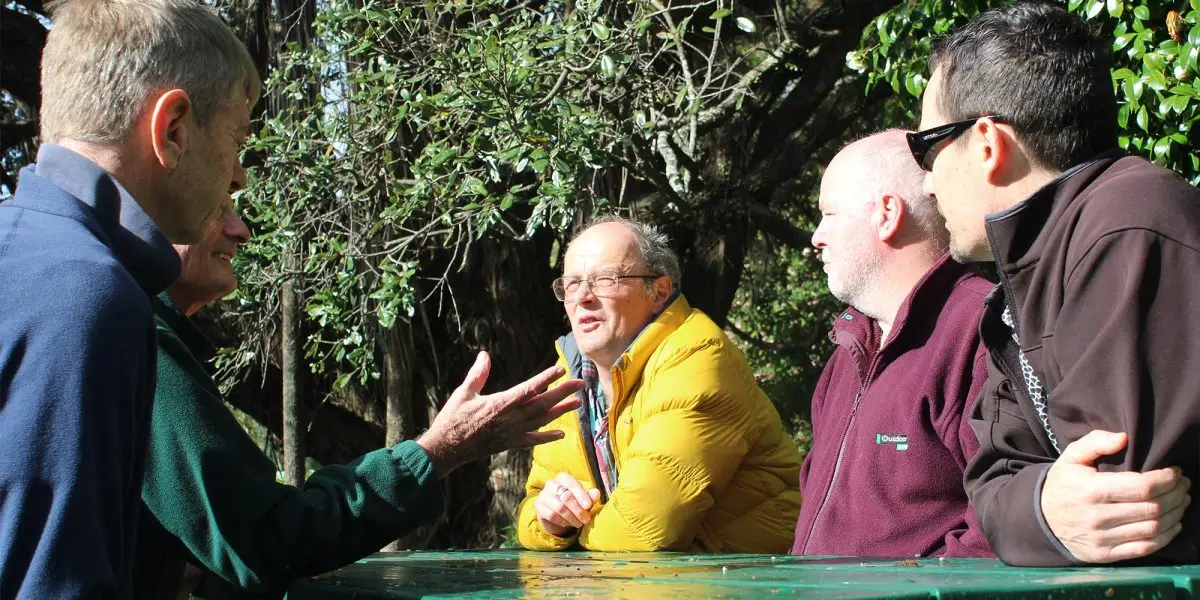
A men's group is a regular gathering of a small group of men (typically 12 or fewer) who sit in a circle and share what's happening in their lives. Not just the highlights, but the real stuff: the challenges, fears, failures, and feelings that most men rarely get to speak out loud.
It's a confidential, non-judgemental space where honesty is encouraged, vulnerability is respected, and peer support is offered. There's no hierarchy, no religious or political agenda, and no cost to attend. It's simply men showing up for themselves and for each other. For many men, it's the only space in their week to stop doing — and simply be.
It's worth noting: a men's group is a group space, not a social space. The camaraderie that develops over time is real and lasting, but what happens in the circle has a different character and purpose than a conversation at the pub. It's for group work, honest and raw reflection, not banter.
What happens in a men's group?
Most groups meet fortnightly. Men sit in a circle, and one man speaks at a time (often while holding a talking stick) while the others practise active listening. Men endeavour to use "I" statements to share what's been happening in their lives and, more importantly, how they're feeling about it.
Speaking in "I" statements — "I feel anxious," "I've been struggling with" — might sound like a small thing, but it does something important. It keeps a man anchored to his own experience rather than projecting outward. The word "we" assumes what you're feeling is true for everyone in the room, which is often not the case.
The simple act of honestly speaking about feelings, paired with active listening, is the core feature of the sharing circle. Over time, as trust builds, men learn to lean into the edge — to stay with discomfort rather than steer away from it — and to sit with a question like: what am I not saying, or afraid to admit? This nudges the sharing to a deeper level where patterns emerge, old wounds surface, and men find themselves exploring things they've never spoken out loud before.
How a group responds varies. In some groups the culture is for men to offer quiet support and space to be heard, with little feedback. Other groups tend to be more direct, challenging men on their patterns and holding them firmly accountable to how they've said they want to live. Either way, men learn to speak honestly, take responsibility for their actions, and sit with the parts of themselves they'd rather not face.
Over time it can become clear that some men are sharing the same story week after week, and that offering each other support without challenge isn't enough. In many groups, a natural desire to see a brother genuinely grow leads someone to ask: "OK, so what are you going to do about it?" A challenge like this, rooted in care and an honest desire to see the man thrive, can push him to look more closely at the patterns he's been avoiding, and to set real goals and commitments he's willing to be held accountable to.
It's not always comfortable, but that's often where the most meaningful growth happens.
For a more detailed look at how this transformational work develops over time, read our post on the deeper work of men's groups.
Is a men's group the same as therapy?
No, a men's group is not therapy. It's a peer-led space, not a professional one. There's no leader, no cost, and no agenda other than supporting each other to grow and improve our lives. Many men find that a group complements professional support well. Others come with no history of therapy at all and simply want deeper connection, more honest friendships, or a place to make sense of where they are in life. Men dealing with serious trauma or significant mental health challenges are encouraged to seek professional support alongside, or before, joining a group.
Wondering how a men's group differs from AA, sports clubs, online communities, and other male spaces? We've covered that in a separate post.
Who is a men's group for?
Men's groups are open to all men, all ages, all backgrounds, all cultures. There's no experience required and no threshold you need to meet. Men come for many different reasons:
- Some feel isolated or lonely and can't quite put their finger on why
- Some have lost a sense of purpose or feel out of alignment with who they want to be
- Some are navigating difficult life changes such as separation, loss, or career upheaval
- Some want deeper friendships and a place where they can be real, without the masks most men wear
- And some just know they want more from life and are ready to be supported and challenged to grow
Many men find their way to a group through a growing sense of loneliness or isolation — something we explore in depth in our post on the male loneliness epidemic.
However a man finds his way to a men's group, he almost always discovers the same thing: other men are going through similar things, and no man is alone in what he's been carrying.
What are the benefits?
The benefits men report from participating in men's groups are wide-ranging and often transformative. Over time, men commonly experience:
- Less isolation and more genuine connection and belonging
- Greater self-awareness, self-worth, and confidence
- Better communication and the ability to set healthy boundaries
- Breaking old patterns in relationships
- A stronger sense of purpose and direction
- A brotherhood built on safety, acceptance, and trust
One consistently reported benefit is improved communication, developed through the practice of active listening — being fully present with another person without becoming defensive, planning your response, offering advice, or deflecting. Men who practise this in a group setting regularly find it transforms how they communicate at home, at work, and in friendships.
Many men find they show up as more capable partners, fathers, and mentors. They become more honest, more accountable, and more at home in themselves.
For a more detailed look at benefits, see the real benefits of joining a men's group.
Is it safe?
Yes, and safety is taken seriously. Confidentiality is a core principle of every group in our network. What's shared in the circle stays there. Groups also operate on clear principles around respect, honesty, and non-judgement, agreed to by all members. These aren't just guidelines but are the foundation that makes genuine trust and openness possible. Working with trauma and its patterns often arises in men's groups, and care is taken to avoid re-traumatisation. With this in mind, more serious trauma is always best supported by professional therapy outside the group.
Read the full guiding principles
Why men only?
Men's groups are single-gender spaces, and it's worth being honest about why. Many men find they're more willing to be honest and more willing to look vulnerable when only other men are present. Old habits around self-presentation tend to drop away faster.
This isn't about excluding women or suggesting men's experiences are more important. It's simply that the work men do in circle tends to go deeper when the usual social pressures aren't operating — and men who do this work consistently tend to show up better in all their relationships as a result.
How do I find a men's group in New Zealand?
The New Zealand Men's Group Network lists men's groups across most regions of Aotearoa, from Northland to Southland. All groups are free to attend and open to any man willing to show up regularly, work on himself, and support others.
If there's no group listed in your area yet, get in touch. New groups are forming all the time. If you're thinking about starting a group yourself, read our guide to starting a men's group. To help you learn what it takes, facilitator training workshops run each year across both islands for men interested in starting a new group.
Ready to take the next step?