
Most men arrive at a men's group more practiced at describing what happened than how they feel about it. The story comes easily. The feelings underneath it take more work.
Many men have spent decades learning to push through discomfort rather than pay attention to it. Emotions were something to manage, suppress, or redirect into action. The inner landscape, what's actually going on beneath the surface, often goes unexamined for years. Sometimes a lifetime.
A simple practice at the start of many men's group meetings begins to change this, one week at a time.
Arriving before you speak
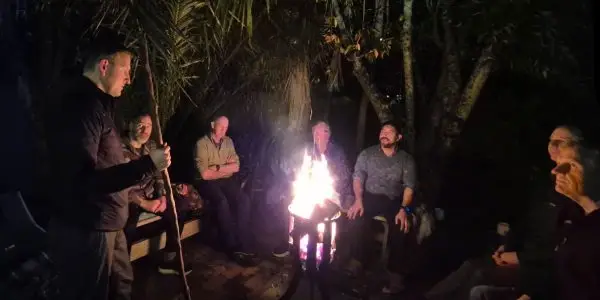
Before the sharing circle opens, many groups begin with a few minutes of stillness. Not a formal meditation, just an invitation to stop, breathe, and arrive. To let the noise of the day settle. Men are asked to sit quietly and turn their attention inward, away from the to-do list, the commute, the unfinished conversation they had before walking in the door.
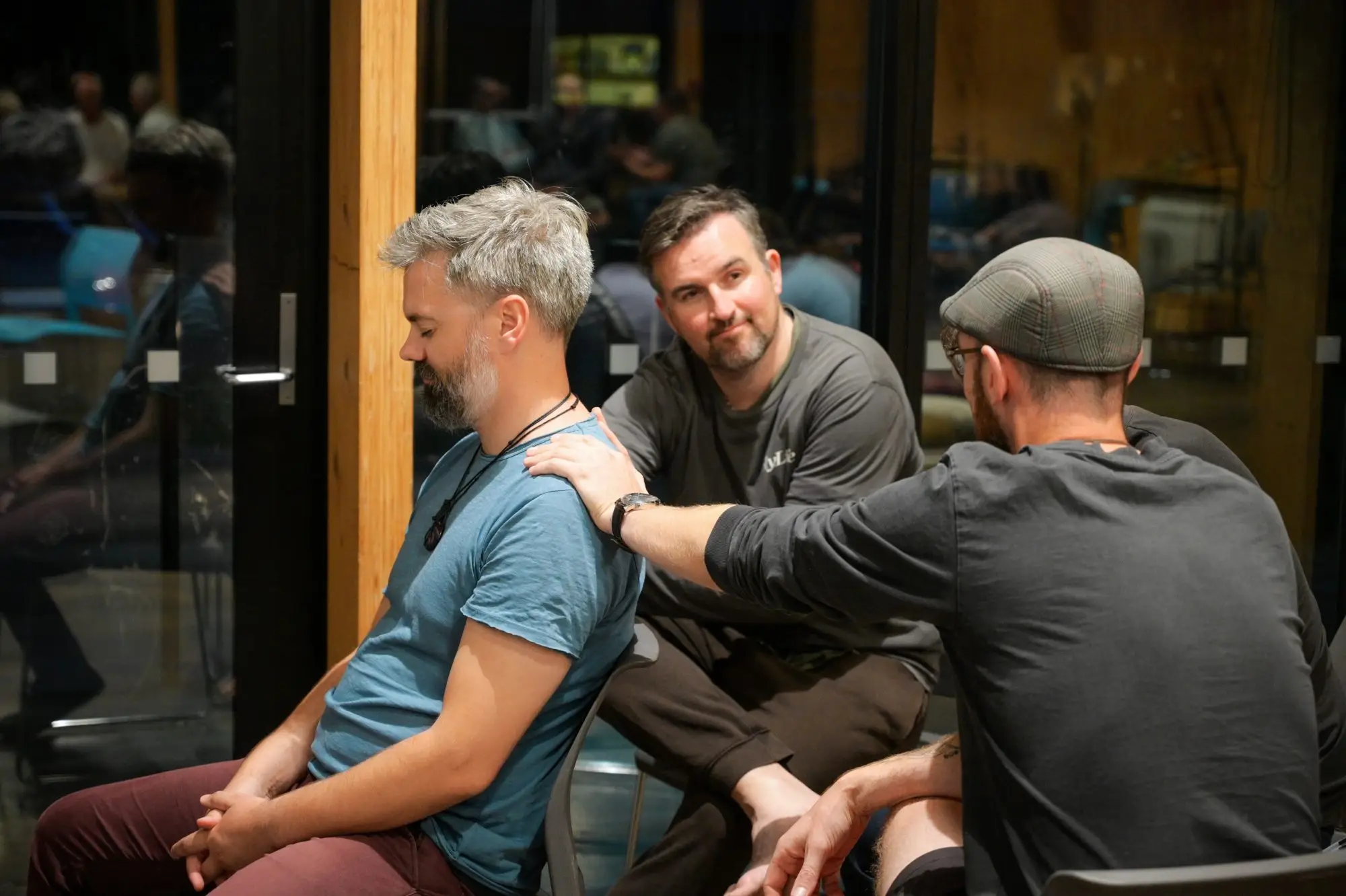
Then, when it's time to check in, each man is asked two things: what are you feeling right now, and where and how do you feel it in your body? Not just the location, but the quality of the sensation. Does it feel tight, heavy, fluttery, contracted, warm, numb?
It sounds simple. For many men, especially at first, it's surprisingly hard work.
The body knows before the mind does
Emotions don't begin as thoughts. They begin as physical sensations. A tightness in the chest, a heaviness in the shoulders, a restlessness in the legs, a clenching in the jaw. The body registers what's happening before the mind has found words for it. Most of us have learned to skip straight past those signals, or to explain them away as physical annoyances rather than recognising them as information.
Psychologists have a name for the difficulty many people have in identifying and articulating feelings: alexithymia, from the Greek meaning "no words for emotions." Research suggests it is more common in men, and it's not hard to understand why. Boys are often taught from an early age to minimise emotional experience rather than explore it. The result, for many men, is a kind of emotional vocabulary gap: sensations are present, but the language to describe them isn't.
When a man is asked where and how he feels something in his body, he has to slow down enough to actually check. That pause is the practice. Over time, it builds a different kind of self-awareness, one rooted in what's actually present rather than in what a man thinks he should be feeling.
Men already know their bodies
One thing that makes this a particularly useful entry point for men is that the body isn't unfamiliar territory. Men are often already physically attuned, whether through sport, manual work, physical challenge, or simply a lifelong habit of using the body to get things done. The body is somewhere men feel at home in a way that abstract emotional language sometimes isn't.
This matters. Asking a man what he's feeling can meet a wall. Asking him where and how he feels it in his body offers a different doorway into the same territory. It's more concrete, less exposing, and often less threatening. And once a man can locate something physically, the knot in his stomach, the tension across his upper back, the emotion attached to it becomes easier to name. The body becomes a way in rather than something to push through.
There is also something deeper here. The body doesn't just register current emotion. It stores it. Feelings that had nowhere to go, experiences that couldn't be processed at the time, old wounds that were buried rather than healed. These don't simply disappear. They live on in the body as chronic tension, numbness, or patterns of physical holding that a man may have carried for years or even decades without quite knowing why. In this sense, tuning into the body isn't just about the present moment. It can be a way of accessing what the mind has actively kept out of reach, the territory that shadow work seeks to bring into the light.
Attention on the body isn't the only doorway into that territory. Story works in a similar way. A myth, a piece of poetry, or a tale from another man's life can reach something inside that direct emotional language misses entirely. We explore this in our piece on why we use stories and myth in men's work.
Getting out of your head
Some groups begin not with stillness but with something more physical. Drumming, movement, breathwork, or simple ritual can help men shift out of thinking mode before the sharing begins. These aren't just warm-ups. They help bypass the analytical mind and access something more instinctive, present, wild, grounded.
It doesn't need to be elaborate. Even five minutes of conscious movement or breathwork before a check-in can change the quality of what follows noticeably. Men who arrive in their bodies first tend to go deeper, faster, and with less resistance than men who come straight from the car, the office, the screen.
A skill that carries beyond the circle
The men who practise this over months and years find it starts to show up elsewhere. They notice physical tension earlier, before it becomes an outburst or a withdrawal. They become quicker to identify what they're actually feeling rather than reaching for a generic "I'm fine." They become more present in their relationships, more able to catch themselves in the moment and say something honest rather than something safe.
It's a small practice with a long reach. And for most men, it starts with sitting quietly for a few minutes, placing a hand on the chest, and asking: what's actually here right now?