Something is shifting in men's circles across New Zealand and across the world. Men are still bringing the familiar things to their groups: relationship difficulties, loneliness, a loss of direction. But increasingly, something bigger is surfacing beneath the individual stories: a shared weight and shared confusion about what it actually means to be a man today.
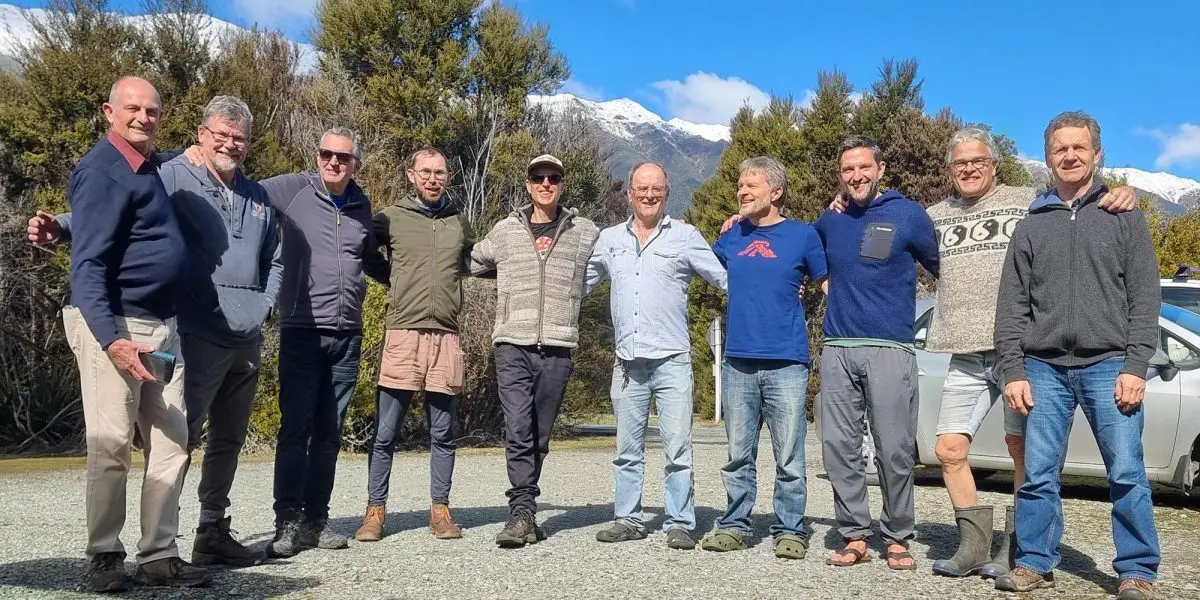
It's a question Nelson-based family violence clinician and men's group facilitator Victor MacGill has been sitting with for a long time. With over 30 years of experience working with men's groups across Aotearoa, Victor recently brought that question into the men's circle format, hosting a weekend workshop in Nelson called A New Men's Story.
Stepping back from the individual story
What struck Victor and the men who gathered that weekend was how much their individual stories had in common. As Victor put it: "Our focus has always been more on personal development and how we can empower ourselves to do better. But we explored wider social issues that help explain why so many of our stories are the same."
That observation matters. When the same patterns keep emerging in men's circles week after week — the same loneliness, the same confusion, the same sense of not quite knowing where you fit — it stops being a personal problem and starts looking like a cultural one.
The ground has shifted faster than men can keep up
Over the past few generations, gender roles, expectations, and the very meaning of masculinity have been turned inside out. The women's movement brought essential and long-overdue change. But men were never given a parallel space to redefine themselves. There was no equivalent moment where men collectively asked: if the old ways don't work, what do we put in their place?
Technology has compounded this. The pace of change in work, relationships, communication, and social expectations has outrun most men's ability to adapt. Work used to be the story men used to explain themselves. Now it's often just one chapter in a constantly changing life. Research consistently shows that the pressure to provide remains central to how men define themselves, yet the conditions that made that role stable and achievable have become increasingly uncertain. The result, as Victor described it, is a generation of men struggling to find their place.
Not entitlement, but pain
What the workshop made clear, and what men's group facilitators hear regularly, is that what men are carrying isn't entitlement or indifference. It's pain, uncertainty, and a genuine longing to show up well as fathers, partners, and human beings. Men who feel blamed for things they didn't personally do. Men who grew up without a clear model of healthy masculinity. Men who want to do better but aren't sure what better looks like.
Research from Equimundo's State of American Men 2025 found that men are not in crisis because of who they are, but because of what they lack: connection, belonging, and a sense of purpose that isn't entirely tied to economic output. That finding resonates strongly with what men bring to circles in New Zealand.
Not a political debate, but an honest sharing circle conversation
What Victor brought to the weekend was not a political argument. The workshop was explicitly pro-men and pro-women, grounded in honesty rather than blame. It acknowledged the harm men have caused and still cause, while also recognising the deep structural changes that have left many men without a clear path forward.
The format was what men's circles do best: sitting together, speaking honestly, and exploring the patterns shaping their lives. Not lecturing and not debating, just asking real questions about who they are and who they want to become — individually and collectively.
Reclaiming a healthy, self-defined masculinity
The invitation of the weekend, and of men's work more broadly, is to begin reclaiming a masculinity that is healthy, grounded, and self-defined — not something handed down from a previous generation, and not defined solely in reaction to what masculinity shouldn't be. Men need to shape a new concept of masculinity actively and honestly — one grounded in what is real and enduring: their bodies, their relationships, their inner lives. The digital world pulls hard against all of that, flooding men with noise, comparison, and narratives that shift by the week. A healthy masculinity needs roots strong enough to hold.
That work is already happening in men's groups across New Zealand, one circle at a time. Victor's workshop was an opportunity to zoom out and look at the bigger picture behind the individual stories, and to begin finding language for what a new men's story might look like. It's a conversation worth having — and it's only just beginning.
Victor MacGill is a family violence clinician and men's group facilitator based in Nelson, Aotearoa New Zealand. He has been working with men's groups for over 30 years.
For a deeper look at the historical roots of what men are experiencing today, read our post on the missing rite of passage and how men's work is helping reclaim it.
For more on the loneliness many men are carrying and what men's groups offer in response, read our post on the male loneliness epidemic.
If you're new to men's groups and wondering what makes them distinctive, see how a men's group differs from other male spaces.